|
|
| Line 1: |
Line 1: |
| ==Summary==
| |
| {{Information
| |
| |Description='''Figure 1.''' Patterns of publication on Cannabis recovered from the Scopus platform using six different search terms. '''(a)''' Relative growth rate (RGR) of world’s scientific publications for each search argument. '''(b)''' Absolute number of publications for each search argument. Three important events related to the development of biotechnological methods are highlighted in this section. First, in 1977, Fred Sanger described an enzyme-based methodology for DNA sequencing. Second, in 1989, Mullis and Faloona proposed the Polymerase Chain Reaction (PCR) methodology for in vitro DNA amplification. Third, in early 2005, the next-generation sequencing (NGS) was introduced by Life Science through the 454-pyrosequencing methodology.
| |
| |Source={{cite journal |title=A bibliometric analysis of Cannabis publications: Six decades of research and a gap on studies with the plant |journal=Publications |author=Matielo, C.B.D.; Sarzi, D.S.; Justolin, B.; Lemos, R.P.M.; Camargo, F.A.O.; Stefenon, V.M. |volume=6 |issue=4 |pages=40 |year=2018 |doi=10.3390/publications6040040}}
| |
| |Author=Matielo, C.B.D.; Sarzi, D.S.; Justolin, B.; Lemos, R.P.M.; Camargo, F.A.O.; Stefenon, V.M.
| |
| |Date=2018
| |
| |Permission=[https://creativecommons.org/licenses/by/4.0/ Creative Commons Attribution 4.0 International]
| |
| }}
| |
|
| |
| == Licensing == | | == Licensing == |
| {{cc-by-4.0}} | | {{cc-by-4.0}} |
Revision as of 23:37, 2 July 2019
Licensing

 |
This work is licensed under the Creative Commons Attribution 4.0 License. http://creativecommons.org/licenses/by/4.0/CC-BY-4.0Creative Commons Attribution 4.0truetrue |
File history
Click on a date/time to view the file as it appeared at that time.
| Date/Time | Thumbnail | Dimensions | User | Comment |
|---|
| current | 23:37, 2 July 2019 | 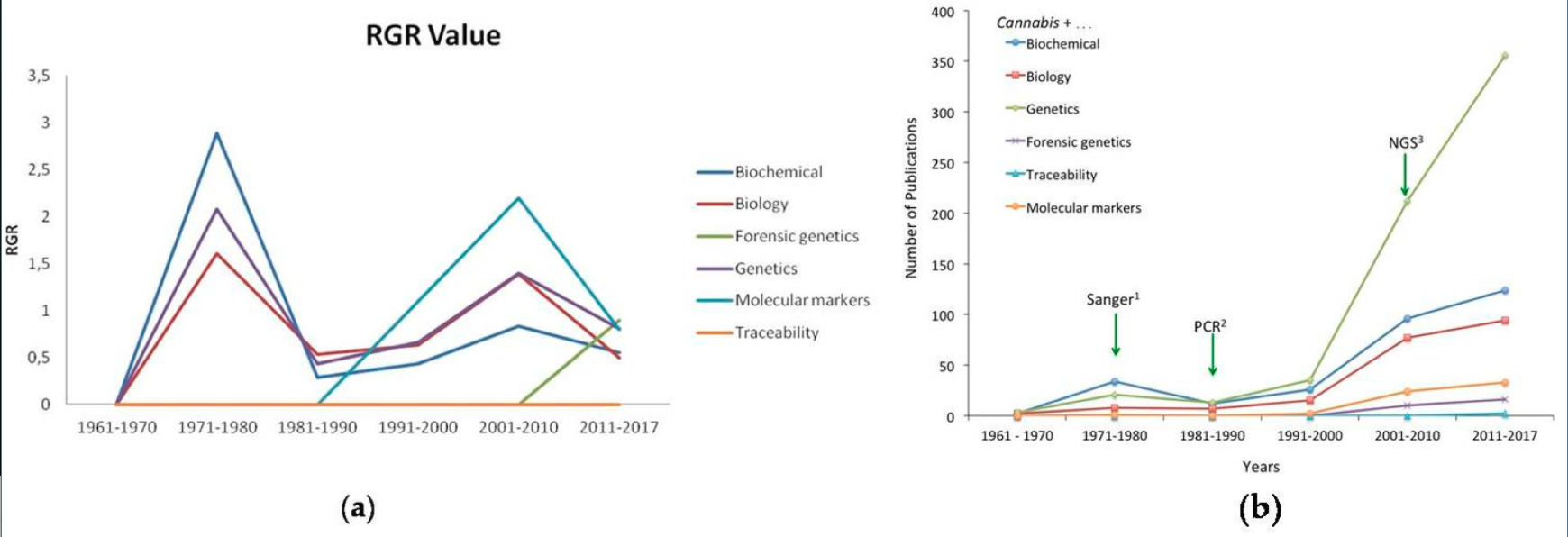 | 1,740 × 596 (359 KB) | Shawndouglas (talk | contribs) | |
You cannot overwrite this file.
File usage
The following page uses this file:
This file contains additional information, probably added from the digital camera or scanner used to create or digitize it.
If the file has been modified from its original state, some details may not fully reflect the modified file.


